
When consumers admire a finely crafted leather briefcase, a custom saddle, or the plush upholstery of a restored classic car, their eyes naturally gravitate toward the surface details. They notice the rich patina of the hide, the precision of the heavy brass hardware, and the perfectly spaced, contrasting top stitch that runs along the borders. However, this beautiful visible stitch is only half of the structural equation.
The true durability of any heavy-duty textile product lies entirely hidden from view, buried deep inside the layers of the material itself. The secret to preventing a catastrophic seam failure does not rest with the visible thread on top, but rather with the tiny, often ignored spool spinning furiously beneath the steel needle plate.
To understand why this hidden component is so critical, you must look at the mechanical physics of the industrial sewing process. Unlike traditional hand sewing, where a single needle and thread pass completely through the material, modern machines utilize a complex lockstitch mechanism. In a lockstitch, the needle punches a violent hole through the thick leather, carrying the top thread down into the mechanical belly of the machine.
Once underneath, a rotating hook catches that top thread and loops it entirely around a secondary, hidden spool of thread. As the needle pulls back up, it pulls this bottom thread into the center of the leather layers, creating a tight interlocking knot. If the machine is calibrated perfectly, this knot remains completely buried inside the dense fibers of the hide.
However, sewing through a quarter inch of dense cowhide or layered canvas requires immense mechanical force. The threads are subjected to extreme friction and rapid tension changes. The tension on the bottom thread fluctuates even slightly, the structural integrity of the entire seam is compromised.The bottom thread is too loose, the top thread pulls the knot to the surface, creating an ugly, abrasive bump that will quickly wear away against daily friction. If the bottom thread snags because it was wound unevenly, the needle will simply snap under the extreme torque.
This brings us to the greatest mechanical bottleneck in industrial leathercraft and heavy textile manufacturing: the winding process. In traditional setups, a machine operator must stop their work, take an empty metal spool, and manually wind the bottom thread using a small attachment on the side of their heavy-duty machine.
This manual process is highly susceptible to human error and mechanical inconsistency. The thread often crosses over itself, creating microscopic ridges and snags. The tension varies wildly depending on how fast the motor is running while winding. Furthermore, because a manual winder cannot pack the thread tightly enough, the spool runs out of yardage very quickly. For a professional artisan sewing a long, continuous seam on a leather sofa, running out of bottom thread halfway through the stitch line is an absolute disaster. Stopping to rewind creates a highly visible, weak tie-off point in an otherwise perfect, sweeping seam.
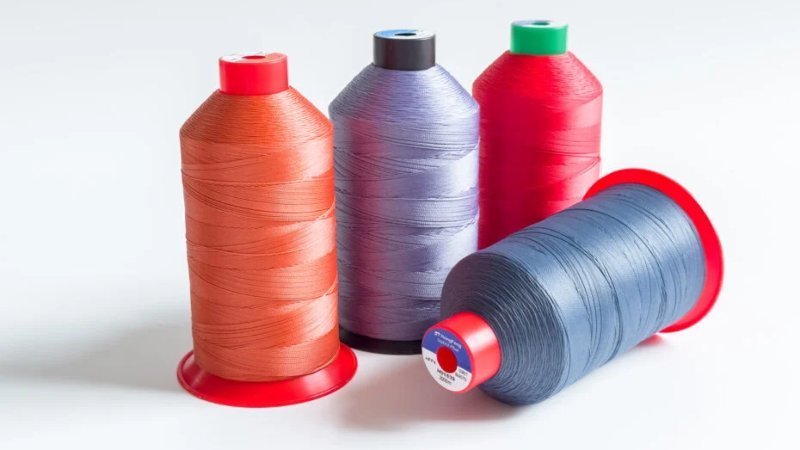
To solve this mechanical vulnerability, modern production facilities and high-end artisans have largely abandoned the manual winding process. Instead, they rely on highly engineered, factory-wound alternatives. By utilizing pre wound bobbins, makers guarantee that the bottom thread is packed with absolute, mathematical precision.
These factory-produced spools are wound using sophisticated pneumatic machinery that applies a flawless, uniform tension from the very first inch of thread to the last. Because the heavy-duty thread is laid down in perfect concentric circles without any overlapping or crisscrossing, the spool can hold significantly more yardage than a hand-wound equivalent.
The impact of this uniform delivery system is profound. When the machine draws the bottom thread during a rapid lockstitch, it pulls with a completely smooth, predictable resistance. The knot locks exactly in the center of the leather every single time. The needle does not deflect, the thread does not fray, and the artisan does not have to stop mid-seam to reload their machine and compromise the aesthetic.
In the world of heavy-duty manufacturing, workflow efficiency and structural durability are indistinguishable. The longevity of a rugged leather boot or a heavy canvas sail is not determined merely by the quality of the raw materials. It is determined by the flawless execution of thousands of microscopic knots. By removing the unpredictable variables from the bottom thread, artisans ensure that the seams they sew today will easily outlast the materials themselves. Ultimately, the greatest strength of a luxury product is often the meticulous engineering you never actually see.